engineering.

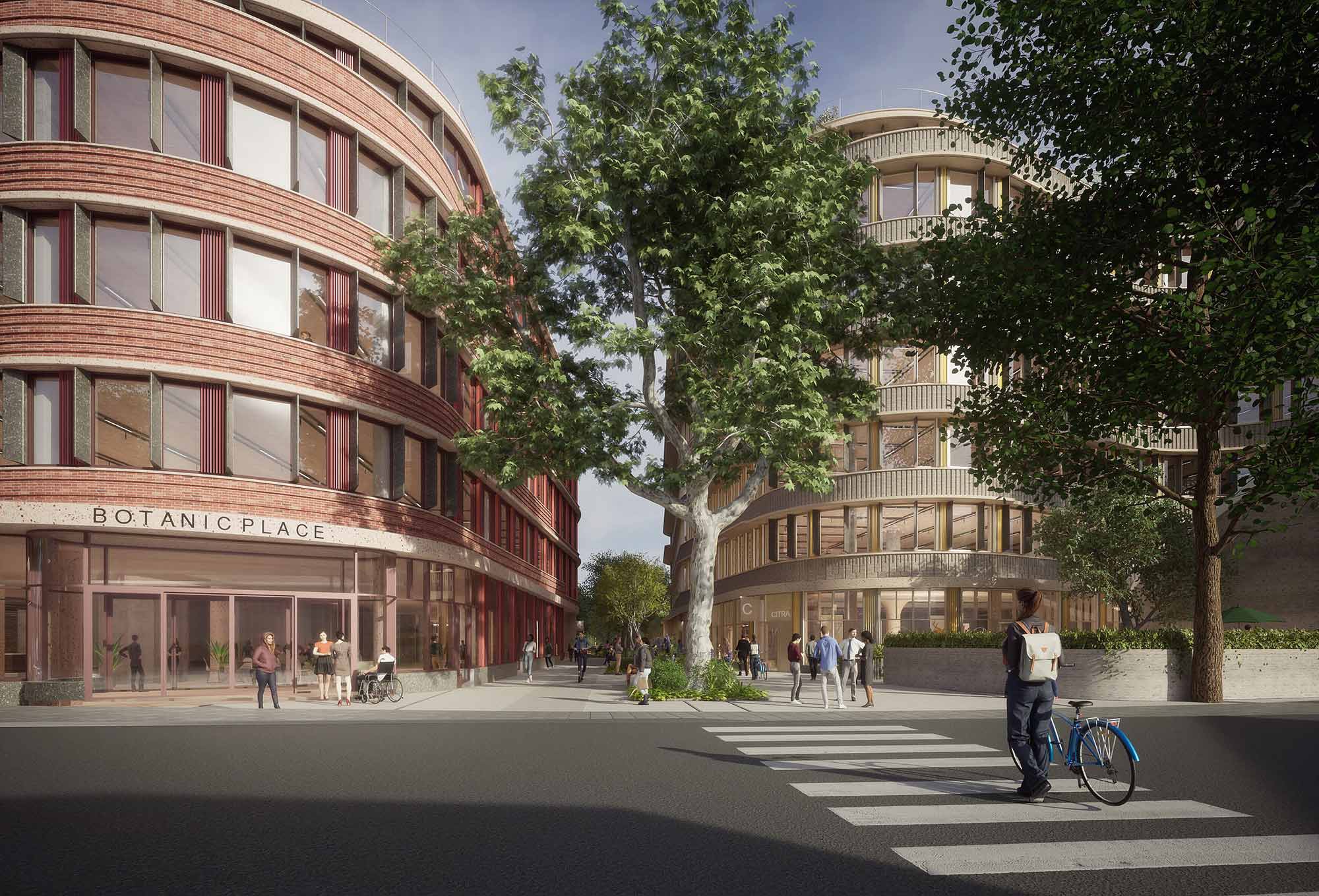
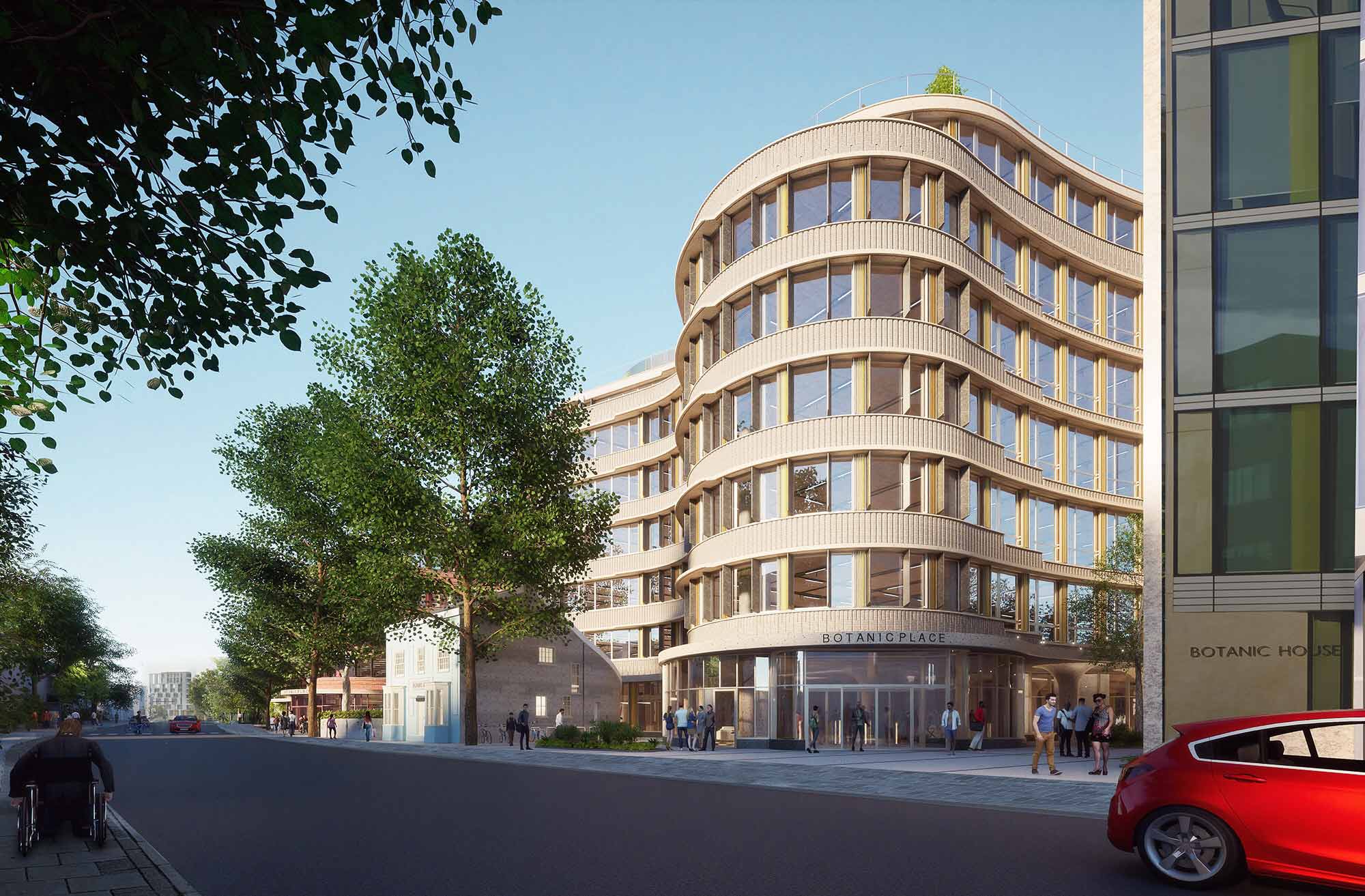
Amidst the leafy Cambridge suburbia, this new commercial destination implements numerous green and smart features in addition to a BREEAM Outstanding specification, with the vision to set a wholly new standard for the city. It’s designed for RailPen and Socius Development by architect AHMM.
An exemplary commercial development that aims to become the UK’s most sustainable and intelligent building outside of London.
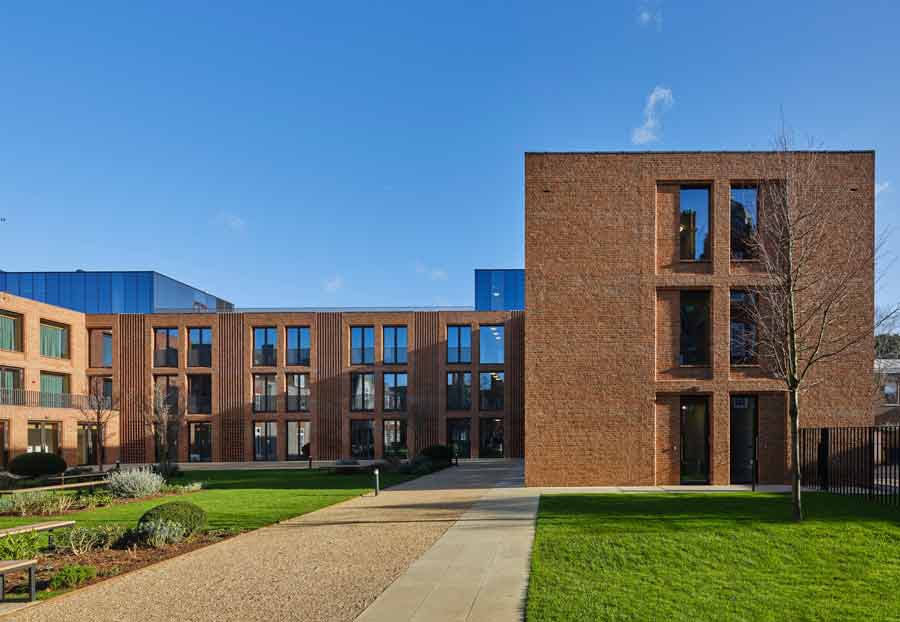
The project, which falls within the ‘New Town and Glisson Road Common’ conservation area, connects the city’s busy Hills Road and the adjacent Grade II-listed Botanic Gardens. The scheme introduces a pair of mid-rise buildings which together provide a notional 70% reduction in operational energy when compared with the city’s existing stock. The site’s former car parking is replaced with a newly permeable and amenity-activated public realm, while a deep new basement is created, providing 1,500+ new cycle spaces. Finally, the site’s historic live-music pub The Flying Pig is restored as a 24/7 civic anchor for the new urban quarter.
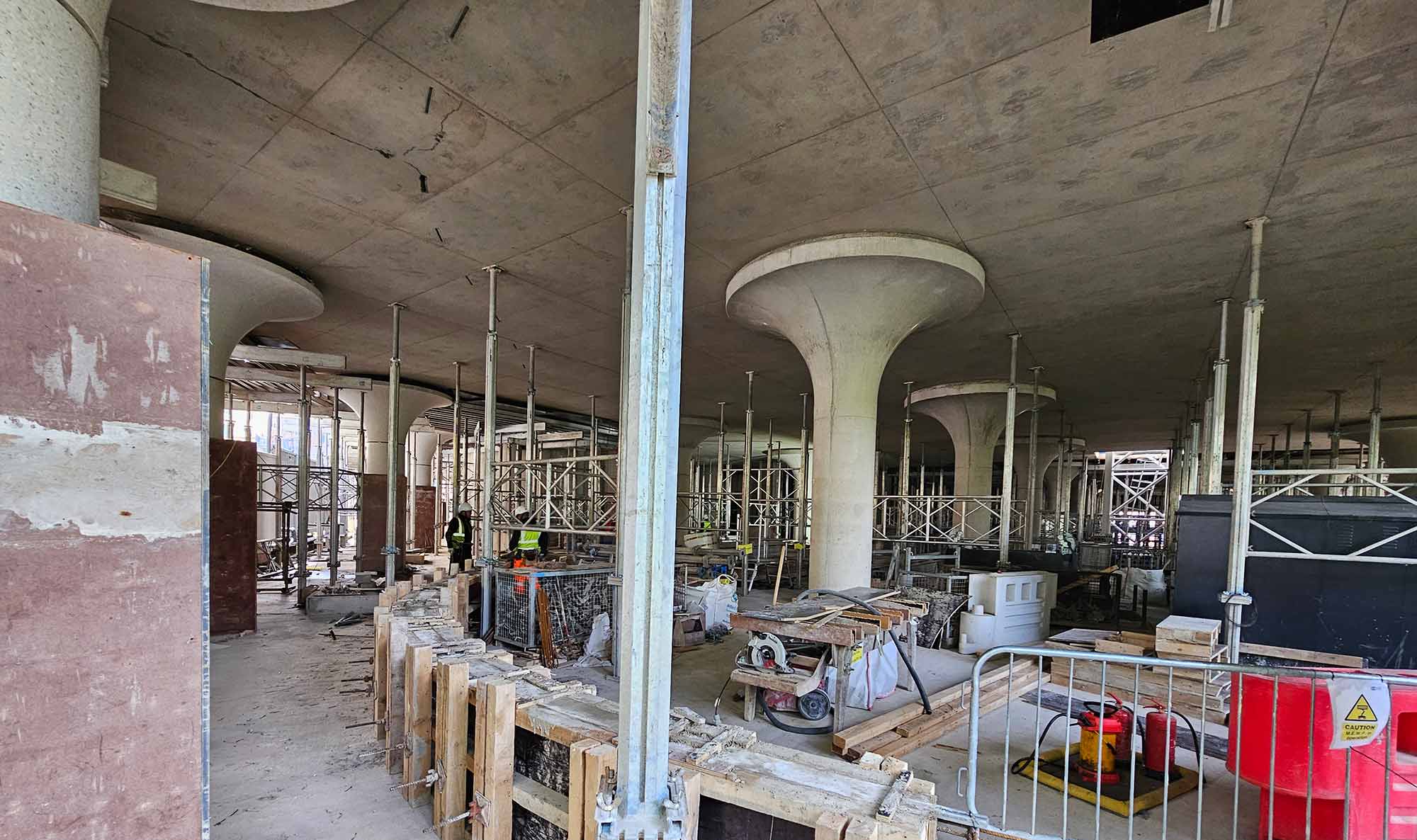
Inside, AKT II’s structural solution resolves the curving plan with a rationalised concrete frame (incorporating GGBS) as the best overall balance of material efficiency and spatial adaptability in the long term. Below, the new basement is similarly waterproofed and detailed to allow the mid-level floorplate to optionally be removed, creating future full-height commercial spaces.
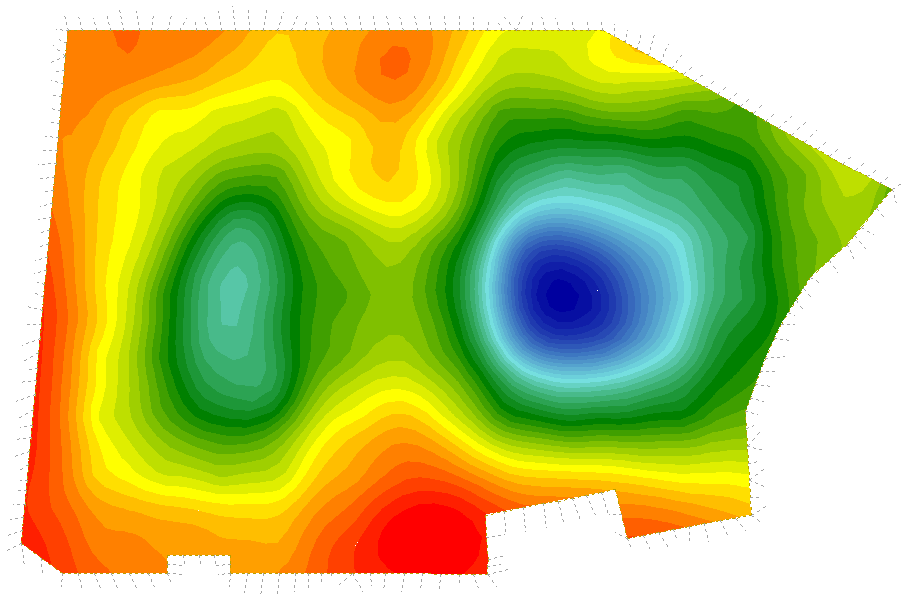
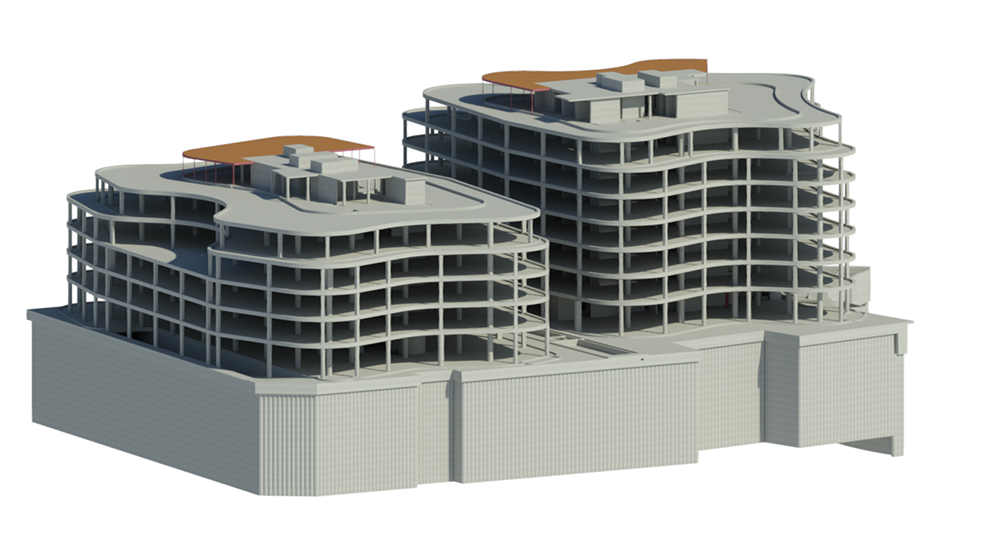
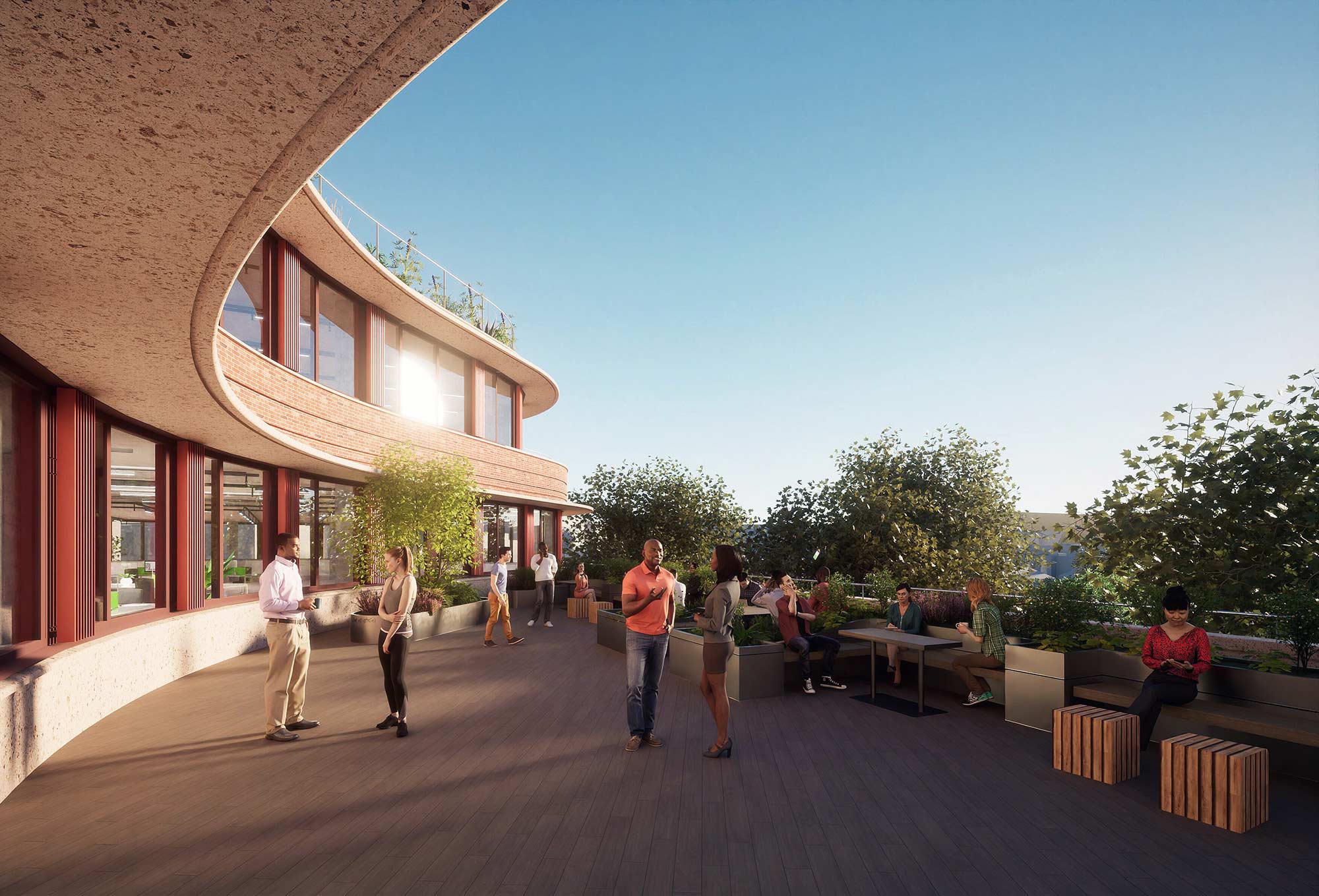
The massing steps back through the uppermost levels to create greened outdoor terraces for both wellbeing and biodiversity. Throughout, AKT II’s civil-infrastructural team has designed a concert of sustainable drainage measures – including green and blue roofing as well as rainwater reuse – which altogether reduce the site’s stormwater runoff to a greenfield rate.
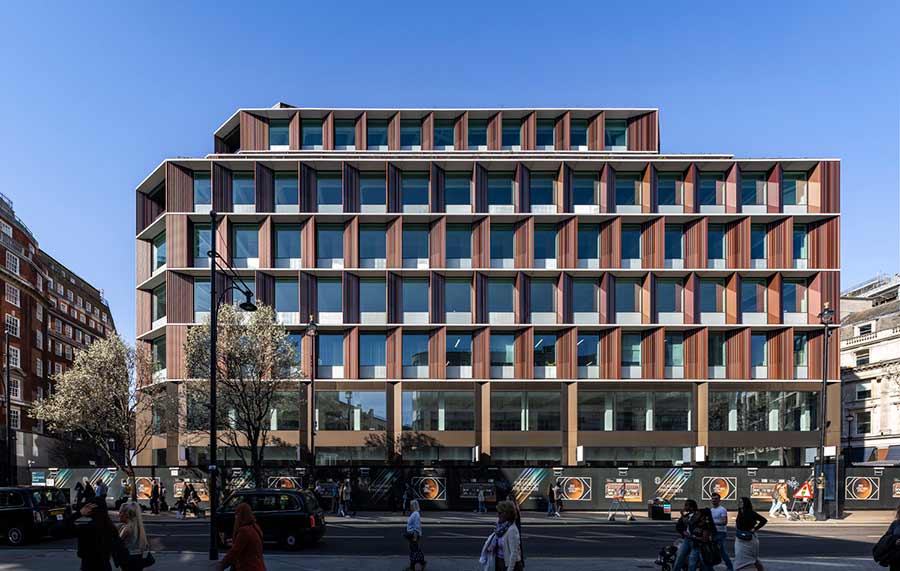
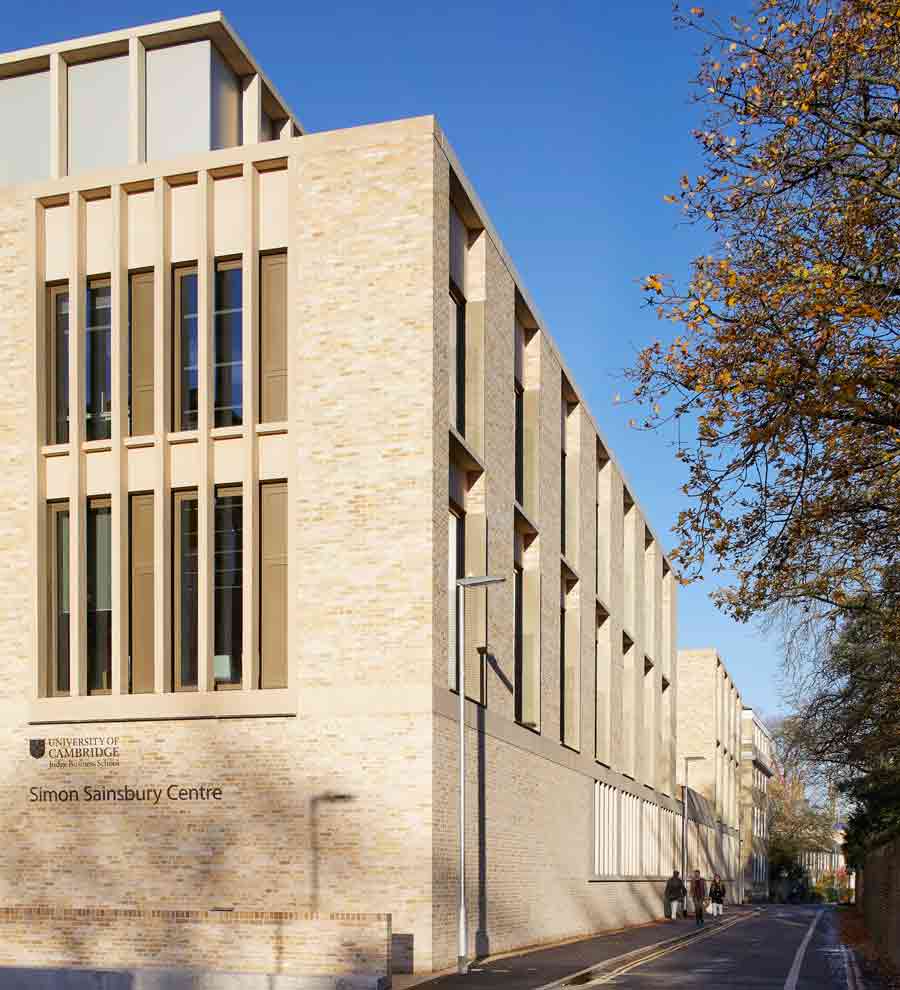
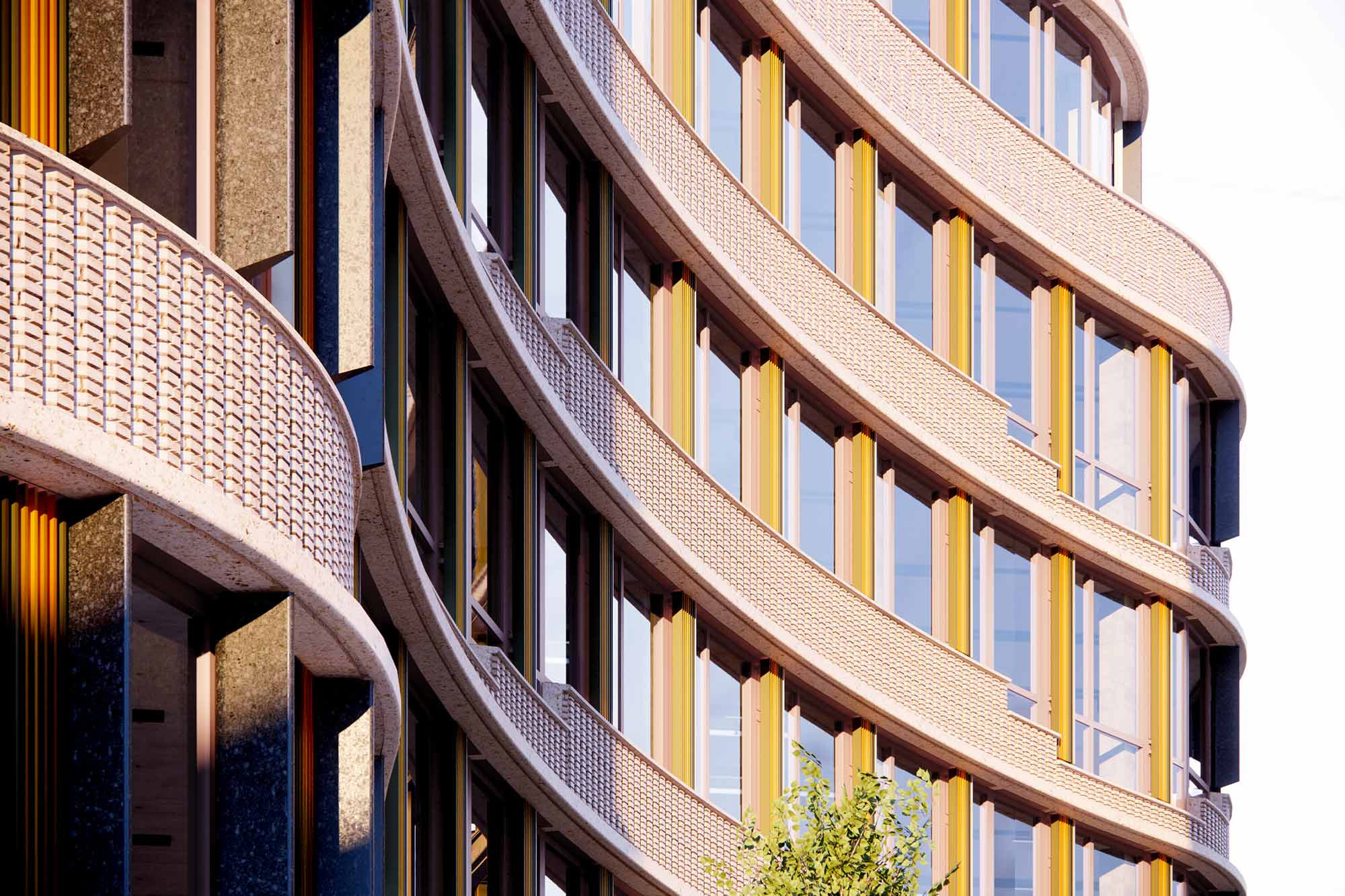
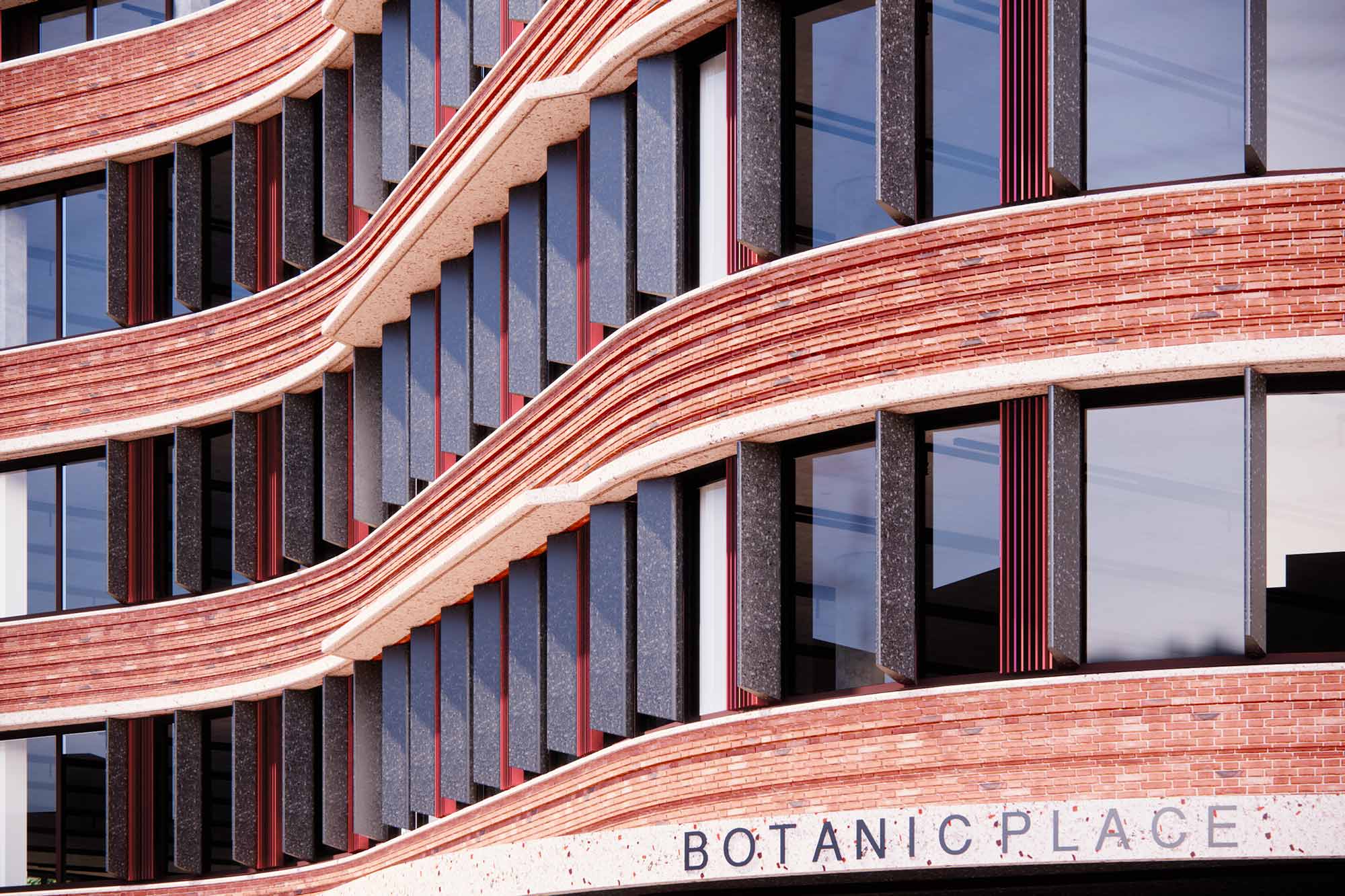
A curved brick faced precast concrete spandrel of varying overhanging projection, faceted windows with a combination of fixed glazing and operable opaque panels protected with architectural louvre forms the typical façade for both the buildings. Lean and sustainable design approach has led to energy efficient envelope with significant reduction in the embodied carbon.
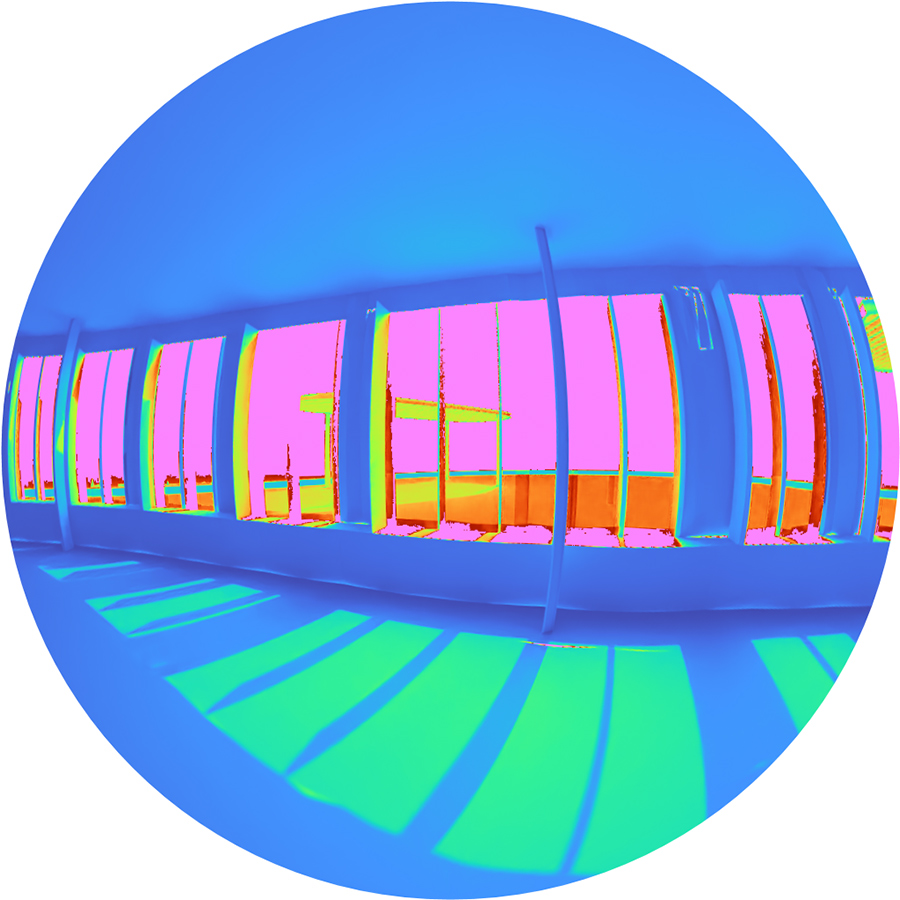
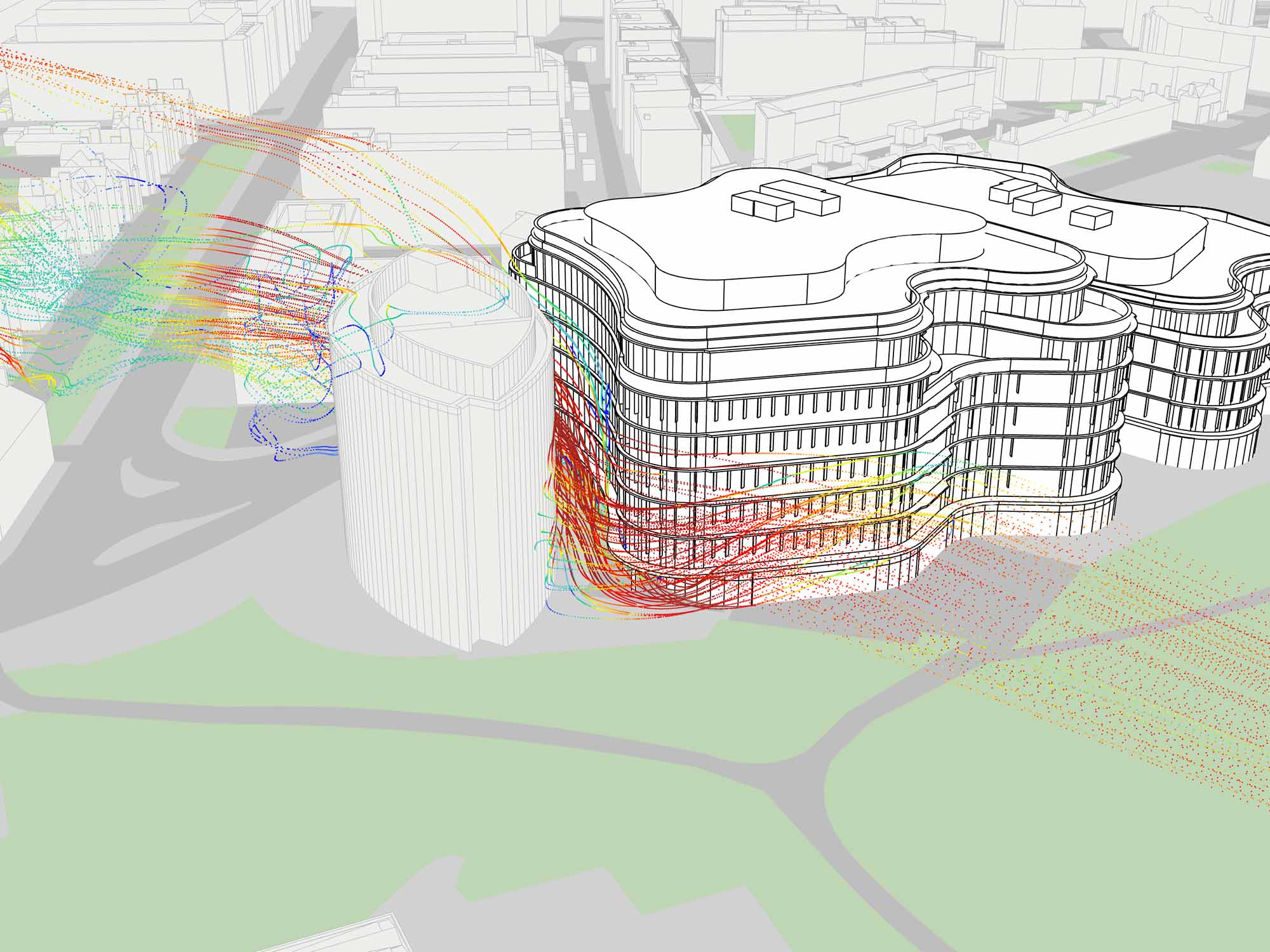
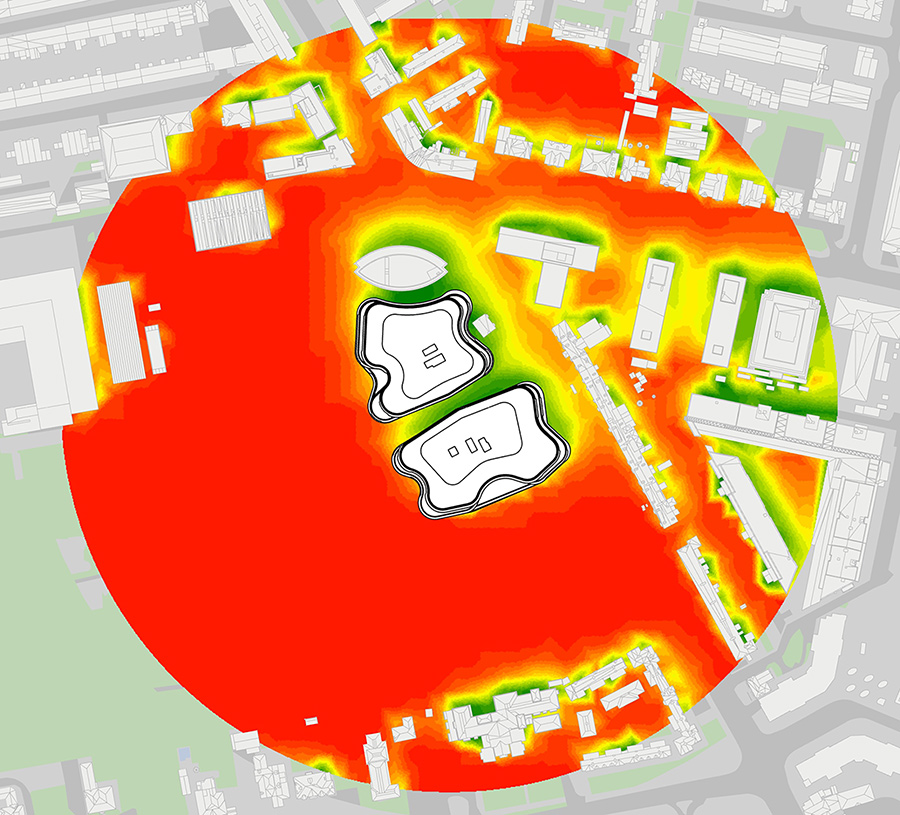
To improve wind and thermal comfort, our bioclimatic team worked closely with the landscape architects to strategically position trees at ground level to reduce uncomfortable and unsafe winds and protect from direct sun. From a daylight perspective, we worked with AHMM to reduce the areas with permanent desks away from the facades and define a glare control strategy through technical-perforatedblinds.